
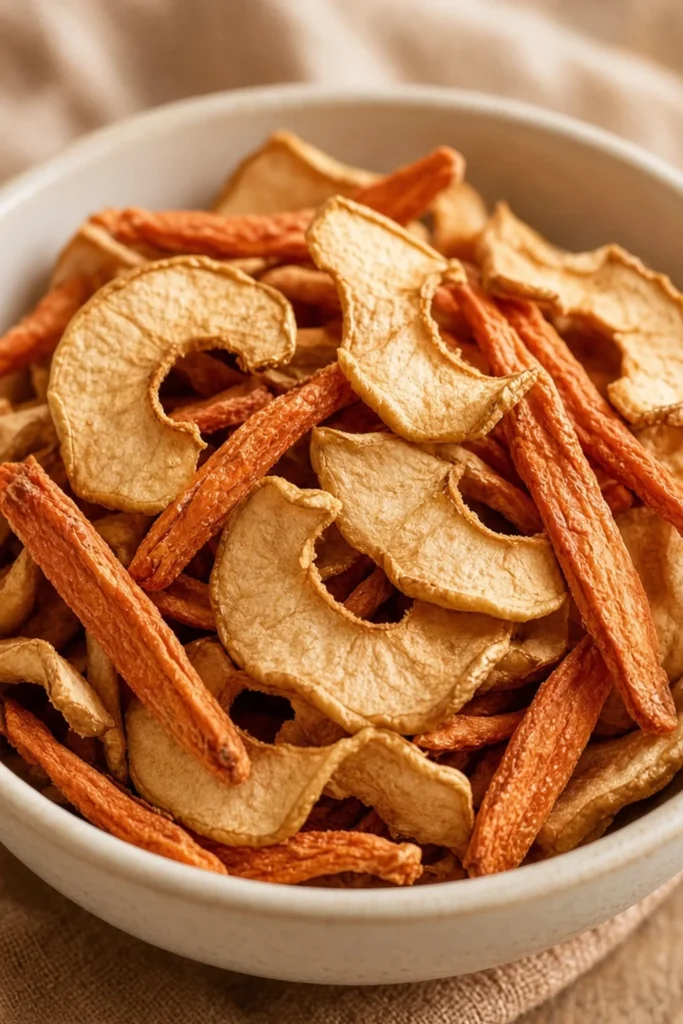
Dried apple and carrot chips are light, mess-free treats for your saddle bag.
Why your horse will love this
- Light to carry
- No crumbs
- Easy
Ingredient notes
Trail Ride Snacks for Horses
Thin apple and carrot slices dried crisp.
- 2 of 2 ingredients safety-checked, 2 marked safe
- Wheat-free
- Grain-free
- Egg-free
- Dairy-free
- Peanut-free
Ingredients
Makes 60 chips
- SafeQuartered to reduce choking risk. Safe amount: 1–2 apples a day.
- SafeCut lengthwise to reduce choking risk. Safe amount: 1–2 carrots a day.
Equipment
- Food dehydrator
Instructions
-
Slice thin.
-
Dry at 135°F (57°C) until crisp.
-
Pack in a zip bag.
Tips for success
- Keep water available.
- Store dry.
- Skip apple for IR horses.
Storage
- Counter 30 days
How much to serve
A few chips at rest stops.
Last updated November 8, 2026.
How to make Trail Ride Snacks for Horses
Trail Ride Snacks for Horses takes about 8 hours 15 minutes from start to finish and makes 60 chips. It is an easy recipe. You will need a food dehydrator. Read through every step once before you start, and set out all the ingredients so nothing is missed.
Ingredients and why they are here
You need 2 ingredients. Each one is checked against the ingredient safety guide for horses.
- 3 medium apples, cored: Quartered to reduce choking risk.
- 4 medium carrots: Cut lengthwise to reduce choking risk.
Step-by-step instructions
- Slice thin.
- Dry at 135°F (57°C) until crisp. Allow about 8 hours.
- Pack in a zip bag.
Tips for success
- Keep water available.
- Store dry.
- Skip apple for IR horses.
How to store it
Let everything cool completely before you pack it away, since trapped steam causes sogginess and mold. Keep it at room temperature for up to 4 weeks. If anything smells off or shows mold, throw it out.
How much to serve
A few chips at rest stops.
Serving ideas
Feed treats in a bucket or from a flat palm, never from your fingers. Using treats only as a reward after work or grooming keeps manners good around the barn.
Why horses love it
Light to carry. No crumbs. Easy.
Feeding tips for horses
Introduce any new feed or treat gradually, as sudden changes can upset a horse’s digestion. Horses with insulin resistance, Cushing’s or a history of laminitis need low-sugar treats, so check with your vet. Hand-feed treats from a flat palm, or put them in a bucket to discourage nipping. Fresh water and good forage come first.
What to watch for
Watch for signs of colic after any feed change: pawing, rolling, looking at the belly, or not passing manure. Colic is an emergency, so call your vet right away. Heat in the hooves or a reluctance to walk can be signs of laminitis, especially in horses on rich feed.
Common mistakes to avoid
The most common mistakes are sudden feed changes, sugary treats for metabolic horses and treats cut in round coins that can cause choke.
Shopping list
Before you start, check that you have apples and carrots. Most of it is at the grocery store; hay, pellets, feed and supplements are at pet or feed stores. Buy fresh produce close to the day you cook.
Make it ahead
To save time, measure and prep the ingredients the day before and keep them covered in the fridge. Label containers with the recipe name and date so you always know what to use first. Most of the work in this recipe is hands-off, so it fits easily around a busy week.
Why make it at home
Making food and treats at home lets you control every ingredient, skip added sugar, salt and dyes, and use fresh produce. It also lets you adjust portions to suit your horse. Keep a simple note of what you make and how your horse responds, so you can repeat the favorites and avoid anything that does not agree with them.
Safety notes
Never add onion, garlic, chocolate, grapes, raisins, xylitol or salt, and check the safety guide before trying a new ingredient with your horse. This recipe is general information, not veterinary advice.
Frequently asked questions
Can horses eat dried fruit?
Homemade, unsweetened in small amounts.
Raisins?
Avoid; too sugary.


Leave a Reply