
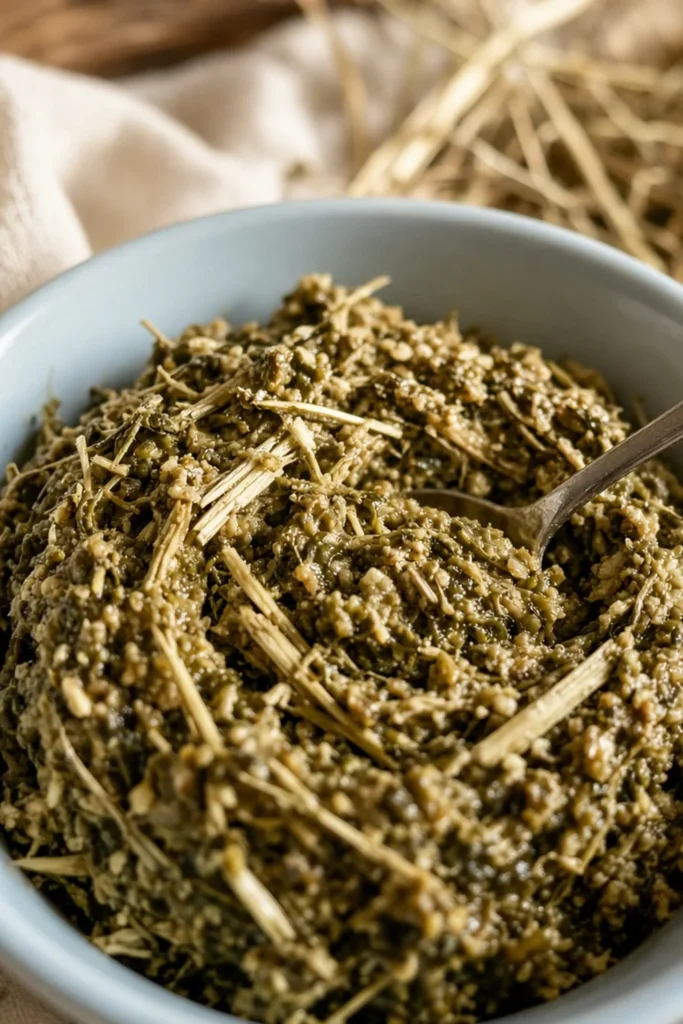
When fresh weeds are scarce, soak dried weeds and hay pellets into a fiber-rich mash.
Why your reptile will love this
- Winter fiber
- Uses dried weeds
- Easy
Ingredient notes

Homemade Tortoise Food Mash
Dried weeds and hay pellets soaked into a mash.
- 2 of 4 ingredients safety-checked, 2 marked safe
- Wheat-free
- Egg-free
- Dairy-free
- Peanut-free
Ingredients
Makes 4 servings
- SafeExcellent calcium-rich staple for bearded dragons and tortoises. Safe amount: Daily.
- SafePhosphorus-free calcium dusted on food. Safe amount: A light dusting.
Equipment
- Bowl
Instructions
-
Soak weeds and pellets.
-
Mix with fresh greens if you have them.
-
Dust with calcium.
-
Serve.
Tips for success
- Soak fully.
- Mix with fresh greens.
- Remove leftovers.
Storage
- Fridge 2 days
How much to serve
A shell-size portion mixed with fresh greens.
Last updated November 8, 2026.
How to make Homemade Tortoise Food Mash
Homemade Tortoise Food Mash takes about 25 minutes from start to finish and makes 4 servings. It is an easy recipe. You will need a bowl. Read through every step once before you start, and set out all the ingredients so nothing is missed.
Ingredients and why they are here
You need 4 ingredients. Each one is checked against the ingredient safety guide for reptiles.
- 1/2 cup dried weed mix: Excellent calcium-rich staple for bearded dragons and tortoises.
- 1/4 cup timothy hay pellets
- 1/2 cup warm water
- 1 pinch calcium powder: Phosphorus-free calcium dusted on food.
Step-by-step instructions
- Soak weeds and pellets. Allow about 15 minutes.
- Mix with fresh greens if you have them.
- Dust with calcium.
- Serve.
Tips for success
- Soak fully.
- Mix with fresh greens.
- Remove leftovers.
How to store it
Let everything cool completely before you pack it away, since trapped steam causes sogginess and mold. Keep it in the fridge for up to 2 days. If anything smells off or shows mold, throw it out.
How much to serve
A shell-size portion mixed with fresh greens.
Serving ideas
Offer food in a shallow dish in the warm part of the enclosure, and mist leafy foods lightly. Moving food with feeding tongs can trigger a feeding response in reluctant eaters.
Why reptiles love it
Winter fiber. Uses dried weeds. Easy.
Feeding tips for reptiles
Reptiles need the right temperatures to digest their food, so feed during the day when the basking area is warm. Dust food with calcium as your vet recommends, and remove uneaten fresh food before it spoils. Babies and adults eat very differently, so adjust the balance of insects and greens for your animal’s age and species.
What to watch for
A reptile that stops eating, loses weight, or has a soft or swollen jaw needs a reptile vet. Soft jaws and shaky limbs can be signs of metabolic bone disease from too little calcium or UVB light. Check your basking temperatures and UVB bulb regularly.
Common mistakes to avoid
The most common mistakes are too much fruit, skipping calcium and feeding when the enclosure is too cool to digest.
Shopping list
Before you start, check that you have dried weed mix, timothy hay pellets, warm water and calcium powder. Most of it is at the grocery store; hay, pellets, feed and supplements are at pet or feed stores. Buy fresh produce close to the day you cook.
Make it ahead
To save time, measure and prep the ingredients the day before and keep them covered in the fridge. Label containers with the recipe name and date so you always know what to use first. Most of the work in this recipe is hands-off, so it fits easily around a busy week.
Why make it at home
Making food and treats at home lets you control every ingredient, skip added sugar, salt and dyes, and use fresh produce. It also lets you adjust portions to suit your reptile. Keep a simple note of what you make and how your reptile responds, so you can repeat the favorites and avoid anything that does not agree with them.
Safety notes
Never add onion, garlic, chocolate, grapes, raisins, xylitol or salt, and check the safety guide before trying a new ingredient with your reptile. This recipe is general information, not veterinary advice.
Frequently asked questions
Can tortoises eat hay pellets?
Plain grass pellets, soaked, are fine.
Winter food?
Dried weeds work well.



Leave a Reply