

A snuffle mat hides pellets in fabric folds. Rabbits nose through it like foraging in grass.
Why your rabbit will love this
- Foraging fun
- Slows eating
- Keeps rabbits busy
Ingredient notes
- Daily pellets Safe
Plain timothy-based pellets, no seeds or colored bits.
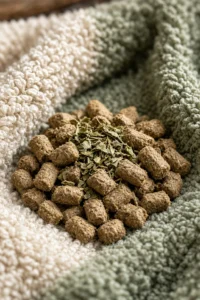
Snuffle Mat Feeding for Rabbits
Daily pellets and dried herbs hidden in a snuffle mat.
- 1 of 2 ingredients safety-checked, 1 marked safe
- Wheat-free
- Egg-free
- Dairy-free
- Peanut-free
Ingredients
Makes 1 mat
Equipment
- Snuffle mat
Instructions
-
Sprinkle pellets into the mat.
-
Add a pinch of herbs.
-
Let your rabbit forage.
-
Wash the mat weekly.
Tips for success
- Supervise in case of chewing.
- Use fleece mats.
- Start with pellets on top.
How much to serve
Use the daily pellet portion.
Last updated November 8, 2026.
How to make Snuffle Mat Feeding for Rabbits
Snuffle Mat Feeding for Rabbits takes about 10 minutes from start to finish and makes 1 mat. It is an easy recipe. You will need a snuffle mat. Read through every step once before you start, and set out all the ingredients so nothing is missed.
Ingredients and why they are here
You need 2 ingredients. Each one is checked against the ingredient safety guide for rabbits.
- 1 portion daily pellets: Plain timothy-based pellets, no seeds or colored bits.
- 1 pinch dried herbs
Step-by-step instructions
- Sprinkle pellets into the mat.
- Add a pinch of herbs.
- Let your rabbit forage.
- Wash the mat weekly.
Tips for success
- Supervise in case of chewing.
- Use fleece mats.
- Start with pellets on top.
How much to serve
Use the daily pellet portion.
Serving ideas
Scatter part of the portion across the enclosure or tuck it into a hay pile so your rabbit forages for it. Foraging keeps rabbits active and busy, and it slows down rabbits that gulp their food.
Why rabbits love it
Foraging fun. Slows eating. Keeps rabbits busy.
Feeding tips for rabbits
A rabbit’s gut is sensitive, so add any new food in small amounts over about a week and watch the droppings. Hay should always make up most of the diet, with fresh greens second and pellets and treats a small part. Wash all produce well, and serve greens fresh rather than wilted.
What to watch for
Soft or small droppings mean you should slow down with new foods. A rabbit that stops eating or stops passing droppings for more than a few hours needs a vet urgently, because gut stasis can become serious fast. Weigh your rabbit monthly to catch weight gain from too many treats.
Common mistakes to avoid
The most common mistakes are too much fruit, too many pellets and not enough hay. Wilted or wet greens and sudden diet changes also upset a rabbit’s gut.
Shopping list
Before you start, check that you have daily pellets and dried herbs. Most of it is at the grocery store; hay, pellets, feed and supplements are at pet or feed stores. Buy fresh produce close to the day you cook.
Make it ahead
To save time, measure and prep the ingredients the day before and keep them covered in the fridge. Label containers with the recipe name and date so you always know what to use first. Most of the work in this recipe is hands-off, so it fits easily around a busy week.
Why make it at home
Making food and treats at home lets you control every ingredient, skip added sugar, salt and dyes, and use fresh produce. It also lets you adjust portions to suit your rabbit. Keep a simple note of what you make and how your rabbit responds, so you can repeat the favorites and avoid anything that does not agree with them.
Safety notes
Never add onion, garlic, chocolate, grapes, raisins, xylitol or salt, and check the safety guide before trying a new ingredient with your rabbit. This recipe is general information, not veterinary advice.
Frequently asked questions
Do rabbits use snuffle mats?
Many love them.
What if they chew it?
Remove it and use a dig box instead.


Leave a Reply